
Make hat sizing clearer on Shopify product pages.
Shoppers match the size around their head, see their size on your Size Chart, then see the hat on their own photo.


 Virtual Try-On
Hat sizes are about one number most shoppers don’t know.
A hat fits on the size around the head. Most shoppers have never measured it, and S, M and L mean different things in every store.
Few shoppers know their head size in centimetres or inches.
Hat sizes come as letters, centimetres or inches, depending on the brand.
A hat on white doesn’t show how it looks on the shopper.
Their head size, matched to your chart.
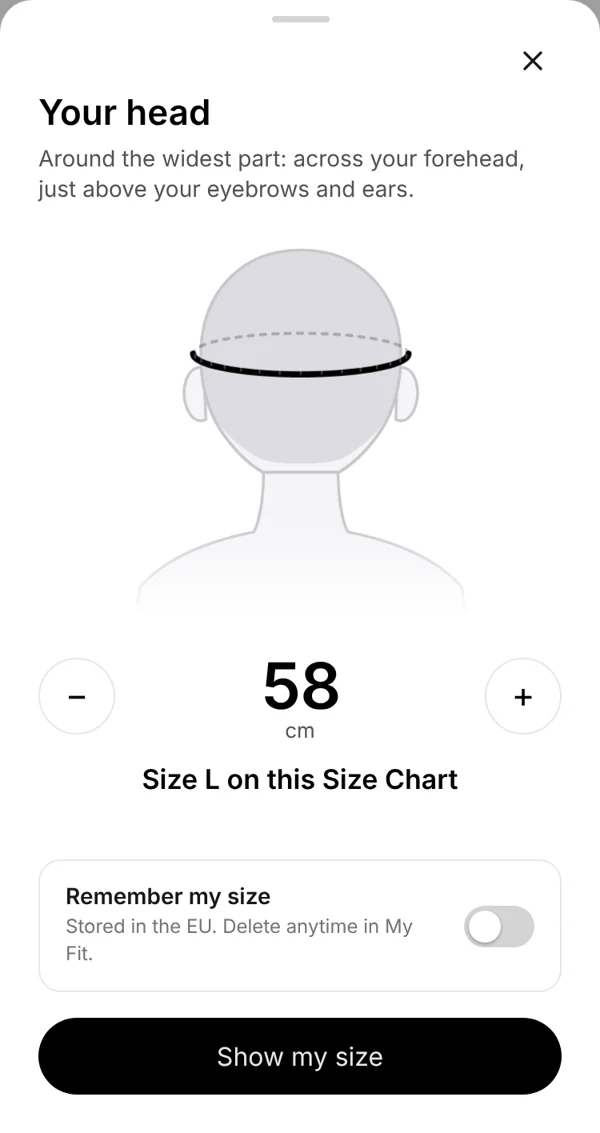
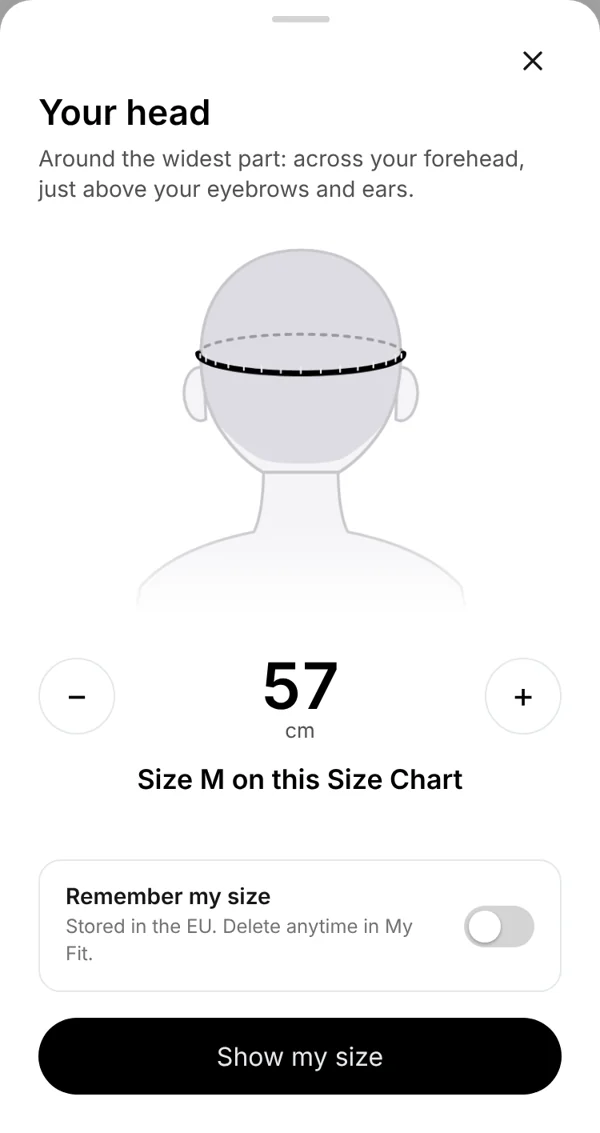
Shoppers adjust a head size with Smaller and Larger, and see which size on your Size Chart it matches.
- Around the widest part: across the forehead, just above the eyebrows and ears.
- Smaller and Larger buttons, in centimetres or inches.
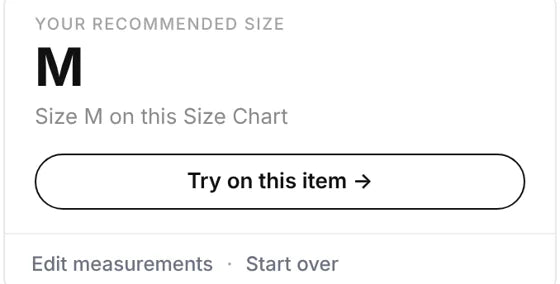
- Their size on your chart, such as “Size M on this Size Chart”.
- One-size hats show whether the adjustable range fits, may be tight, or may be loose.
- Size not stocked? Shoppers see the closest size you have.
The hat on their own photo.
From the size card, shoppers tap Try on this item and see the hat on themselves.
- A clear photo with the head and face visible works best.
- Add to cart from the result, right where they decide.
- Saved for next time if the shopper agrees.
Virtual Try-On shows how the hat may look. It does not measure the head and is not a fit guarantee.
What you set up, and what shoppers get.
- Import your charts, or start from the hat template.
- Add a head size for each hat size, or the adjustable range for one-size hats.
- Products, collections, tags, a vendor or all products.
- Your existing product images power Virtual Try-On.
- Match their head size with Smaller and Larger.
- Then Try on this item.
- Their size on your Size Chart.
- The hat on their own photo.
From their head size to the hat on them.
These are the real screens shoppers see, in order.

The commercial outcomes it supports for hats.
We show you the usage, and you can measure the impact yourself. We don’t promise numbers.
Shoppers get a clear answer for this hat and a look at it on themselves, two common reasons to hesitate. Add to cart works from the try-on result.
Size → add to cart · Size → purchase · Try-on → purchase
A size matched on head size gives shoppers less reason to order two. Size returns are tracked per Size Chart.
Returned for size · Learning from size returns
“Which size is a 57?” gets answered on the page, before it becomes an email.
Your own support inbox, not AI Frame
Shoppers check the size and see the piece on themselves before they decide.
Shoppers who got a size · Try-ons made
Shoppers who save their measurements or photo pick up where they left off on their next visit.
Not measured yet
Size and try-on numbers show how shoppers use AI Frame, not that it caused a sale. To measure the real difference, run a holdout test in your Impact Dashboard. A share of shoppers doesn’t see AI Frame, and the dashboard compares how both groups convert.
Some features, such as the outfit builder and the full Impact Dashboard, depend on your plan.
Hats & Headwear questions merchants ask.
What does my Size Chart need?
A head size for each hat size, in centimetres or inches. For one-size hats, the adjustable range.
How do shoppers measure their head?
Around the widest part: across the forehead, just above the eyebrows and ears. They adjust the size with Smaller and Larger.
What about one-size adjustable hats?
Shoppers see whether the adjustable range fits their head, may be tight, or may be loose.
What if their size isn’t stocked?
They see that the size isn’t available in this hat, and which size is closest.
Is Virtual Try-On a fit guarantee?
No. It shows how the hat may look. The size comes from their head measurement.